
Is the Imperial City of Hue worth visiting? For many travelers, this vast walled complex is the cultural heart of Hue and one of Vietnam’s most important historical sites. Once the seat of power of the Nguyen Dynasty, the Imperial City offers a deep look into royal life, Confucian traditions, and the rise and fall of Vietnam’s last imperial era.
This guide gives you a clear, practical understanding of the Imperial City of Hue in 2026. You’ll learn what the site is, why it earned UNESCO World Heritage status, what you’ll actually see inside, and what visiting feels like today. The goal is simple: help you decide if it fits your travel style and how to experience it well.
Table of Contents
What is the Imperial City of Hue?
The Imperial City of Hue is a massive walled royal complex located on the north bank of the Perfume River, in the center of Hue city.
It was the political and ceremonial heart of Vietnam from 1802 to 1945, when the Nguyen Dynasty ruled the country. For more than a century, emperors governed, lived, and performed state rituals within these walls.
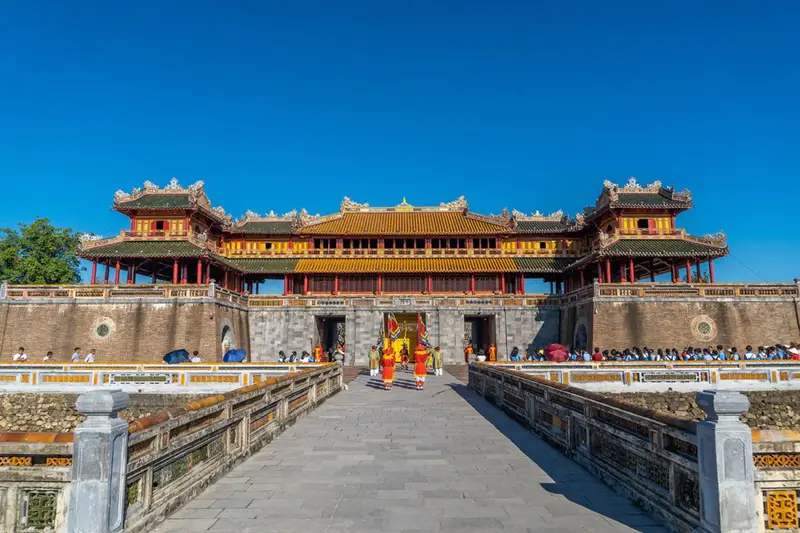
The complex is not a single palace but a layered system of gates, courtyards, temples, and royal residences. At its core lies the former Forbidden Purple City, once reserved exclusively for the emperor and his family.
Today, visitors walk through a mix of restored monuments and war-damaged ruins that together tell the story of imperial Vietnam’s power, traditions, and turbulent history.
Why the Imperial City of Hue is a UNESCO World Heritage Site
The Imperial City of Hue was recognized as a UNESCO World Heritage Site in 1993 for its outstanding cultural and historical value.
It represents the most complete surviving example of a planned imperial capital in Vietnam, reflecting Confucian principles, feng shui beliefs, and traditional Vietnamese architecture influenced by Chinese design.
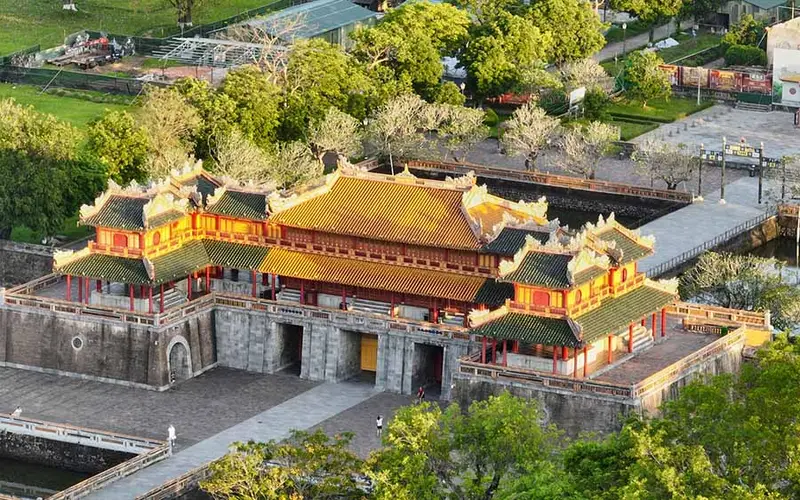
Beyond its architecture, the site holds deep historical importance. It was the center of national power for the Nguyen emperors and played a key role in shaping Vietnam’s political, cultural, and religious identity.
Despite heavy damage during wars in the 20th century, the Imperial City remains a powerful symbol of Vietnam’s imperial past, and ongoing restoration efforts aim to preserve its legacy for future generations.
A short history of the Imperial City (what you need to know)
Construction of the Imperial City of Hue began in 1804 under Emperor Gia Long, the first ruler of the Nguyen Dynasty.
The site was carefully chosen along the Perfume River, following feng shui principles that symbolized harmony between nature, power, and the cosmos.
For more than 140 years, Hue served as Vietnam’s imperial capital, where emperors ruled, held ceremonies, and managed the affairs of the state.
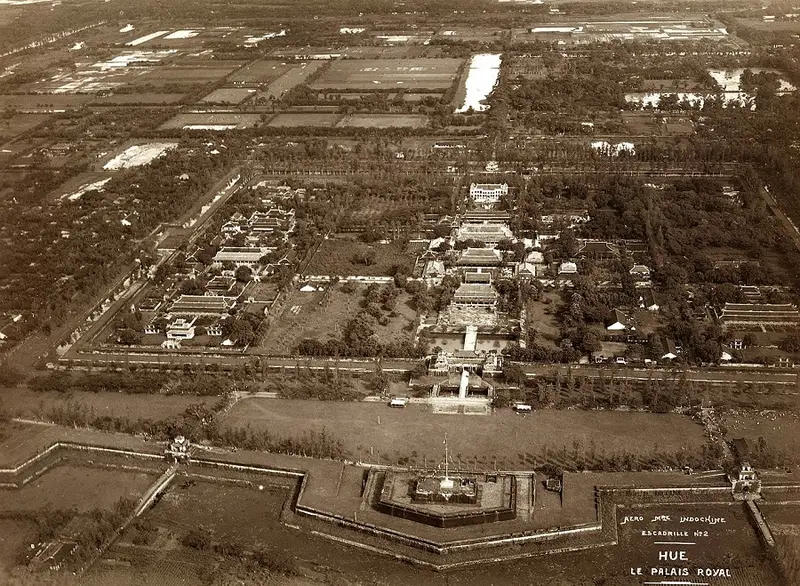
The city’s decline began in the late 19th century with French colonial influence, and it suffered severe destruction during the Vietnam War, especially during the 1968 Tet Offensive. Many palaces and halls were reduced to ruins.
Since the 1990s, large-scale restoration projects have slowly brought key structures back to life, allowing visitors today to see both the grandeur of the past and the scars left by history.
What you’ll see inside the Imperial City
The Imperial City covers a vast area, and visiting it feels more like exploring a small historic town than a single monument.
As you walk deeper inside, the atmosphere becomes quieter and more open. Some areas feel grand and formal, while others are calm, shaded, and almost empty.
Ngo Mon Gate – the ceremonial entrance
Ngo Mon Gate is the main and most impressive entrance to the Imperial City. Built in 1833, it served as the symbolic threshold between the outside world and the emperor’s domain.
Important royal announcements, military victories, and ceremonial events were once proclaimed from the pavilion above the gate.
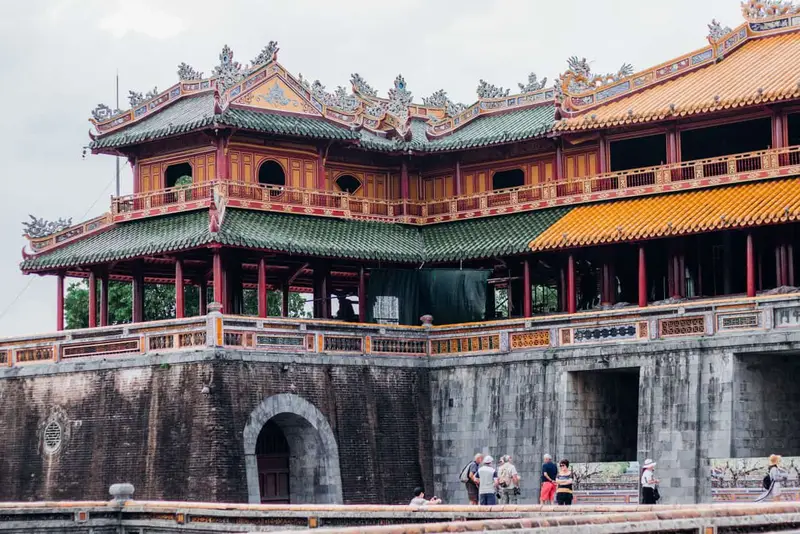
Today, Ngo Mon Gate is one of the most photographed structures in the complex. Its layered roofs, stone base, and elevated viewing platform give a strong first impression of imperial power.
Thai Hoa Palace – coronations and court rituals
Thai Hoa Palace was the political and ceremonial heart of the Imperial City. This is where emperors held coronations, official audiences, and major state rituals.
The building faces south, following traditional imperial design, and once symbolized absolute authority and order within the dynasty.
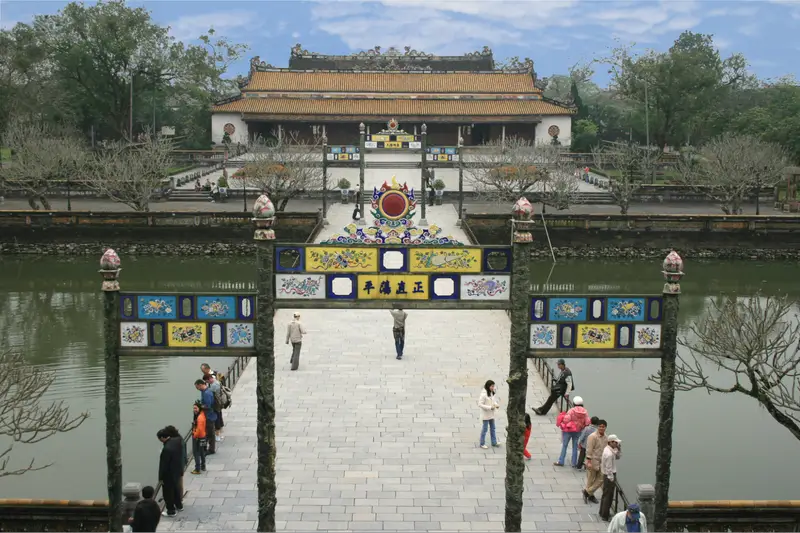
Inside the palace, you can still see the richly decorated interior with red columns, golden motifs, and dragon carvings representing imperial power.
Although the structure has been restored, it remains relatively open and uncluttered rather than being distracted by excessive displays.
The Forbidden Purple City – what remains today
The Forbidden Purple City was once the most restricted area of the Imperial City, reserved exclusively for the emperor, his family, and selected servants.
Modeled after Beijing’s Forbidden City, it contained royal residences, private gardens, and ceremonial halls that symbolized the emperor’s divine authority.
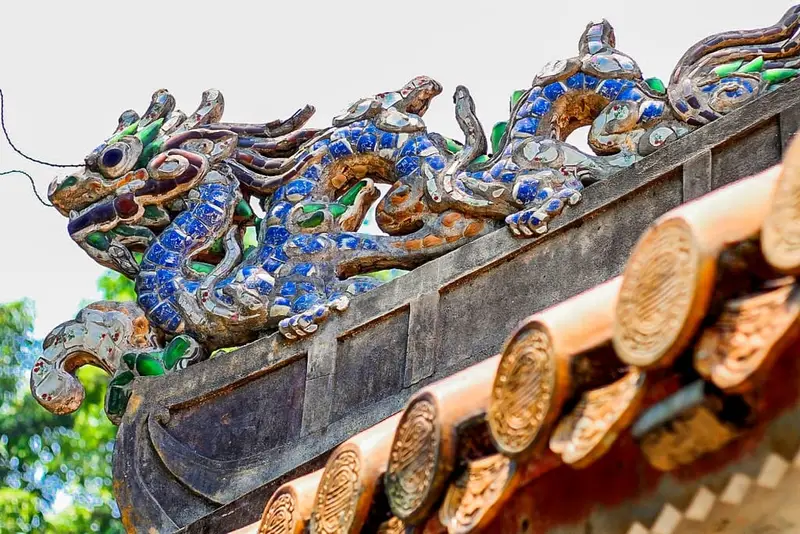
Today, much of the Forbidden Purple City lies in ruins due to heavy bombing during the Vietnam War. Only foundations, gates, and a few reconstructed buildings remain.
This contrast between absence and restoration is striking and often emotional, offering a clear reminder of how war reshaped the site.
Royal temples, gardens, and living quarters
Beyond the main ceremonial axis, the Imperial City opens into a network of royal temples, landscaped gardens, and former living quarters.
These spaces were used for ancestor worship, daily routines, education, and quiet reflection away from official court life. Compared to the grand palaces, they feel more intimate and human in scale.
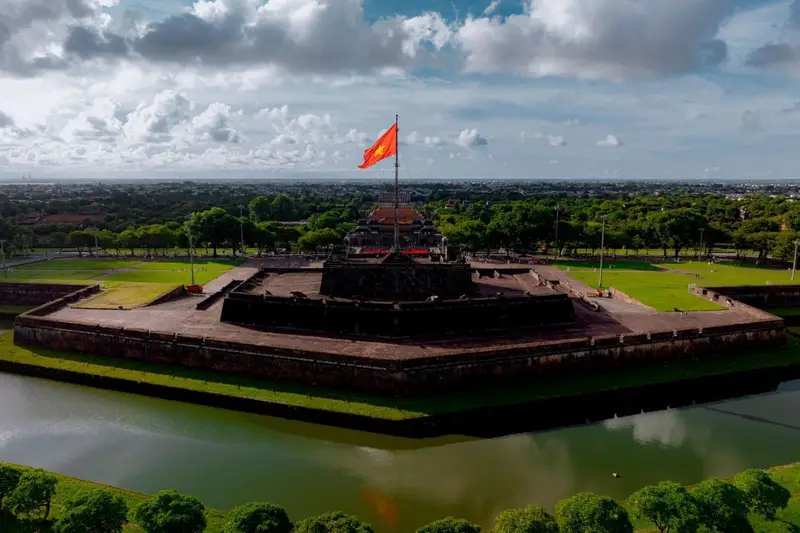
Many of these areas are partially restored and surrounded by greenery, making them some of the most pleasant places to walk. Shaded paths, ponds, and smaller halls offer breaks from the sun and crowds.
For visitors, these sections help balance the experience by showing not just how emperors ruled, but how they lived day to day within the imperial walls.
What’s restored vs what’s in ruins (important expectation-setting)
One of the most important things to understand before visiting the Imperial City of Hue is that it is not fully restored.
While key structures like Ngo Mon Gate and Thai Hoa Palace have been carefully reconstructed, many buildings were destroyed during decades of conflict and remain as ruins or empty foundations.
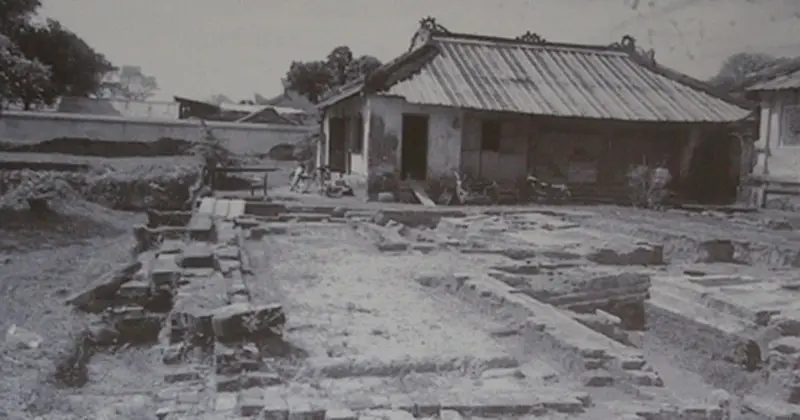
This mix of restoration and destruction shapes the visitor experience. Some areas feel polished and museum-like, while others are quiet, open, and marked only by stone bases and historical plaques. Rather than being a drawback, this contrast helps tell a more honest story of Hue’s past.
What visiting the Imperial City actually feels like
Visiting the Imperial City of Hue is a slow, walking-heavy experience, not a quick photo stop. You’ll spend a lot of time on foot in open spaces, moving between gates, courtyards, and palaces.
On hot days, especially around midday, the heat can feel intense, so you’ll notice yourself seeking shade whenever you can.
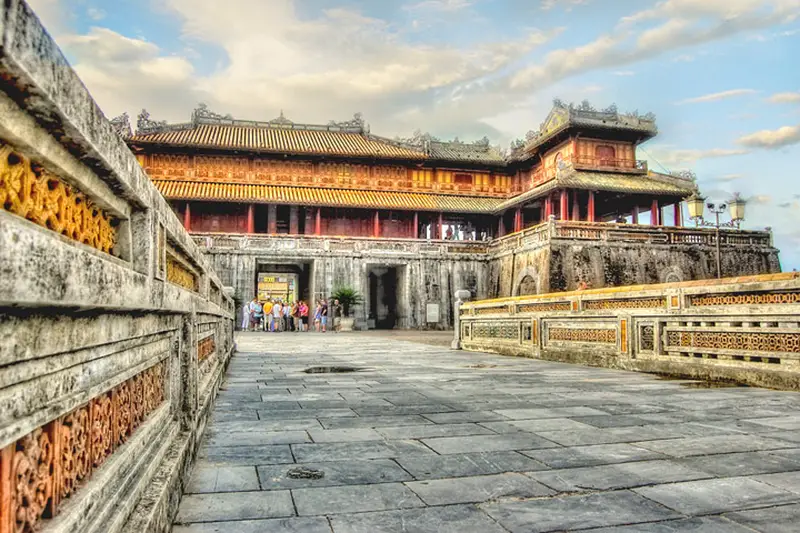
You’ll find the busiest areas near the main entrance and Thai Hoa Palace, but once you walk deeper inside, the atmosphere becomes noticeably quieter.
Some sections feel grand and restored, while others are open, almost empty, marked only by stone foundations and signs explaining what once stood there.
You may need to use your imagination, but if you take your time, the experience feels calm, reflective, and deeply connected to Hue’s history.
How long do you need to visit the Imperial City?
How long you need at the Imperial City depends on how deeply you want to explore. If you’re short on time, you can walk the main route in about one hour, entering through Ngo Mon Gate, visiting Thai Hoa Palace, and getting a quick sense of the site’s scale. This works, but it feels rushed.
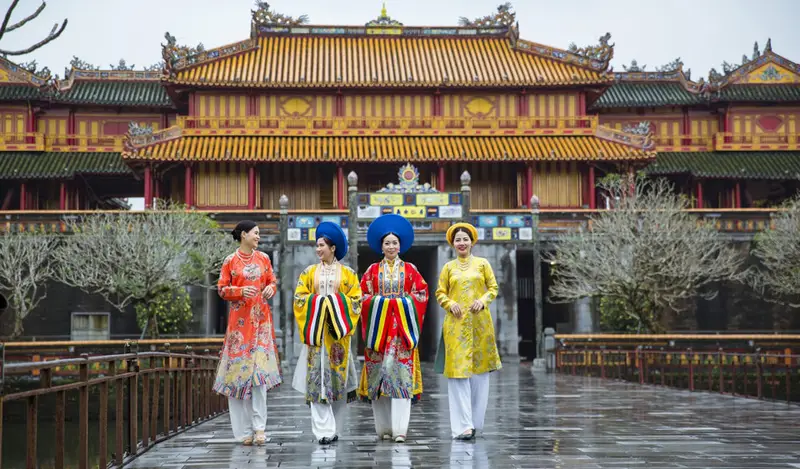
Most first-time visitors should plan for two to three hours. This gives you enough time to explore the major structures, walk into quieter sections, read the information boards, and take breaks in shaded areas.
If you enjoy history, photography, or slower travel, half a day allows you to explore more corners without feeling tired or overwhelmed.
Frequently asked questions about the Imperial City of Hue
Can you explore the Imperial City without a guide?
Yes, you can explore the Imperial City on your own. Clear walking paths and information boards make self-guided visits easy. However, if you want deeper historical context and stories behind the buildings, a local guide or audio guide can add more meaning to what you see.
Is the Imperial City suitable for kids?
The site can be enjoyable for kids, especially older children who like open spaces and history. Keep in mind that the visit involves a lot of walking and limited interactive exhibits, so younger kids may lose interest quickly. Bringing water, hats, and planning short breaks helps.
Is the Imperial City accessible for elderly visitors?
The Imperial City is mostly flat, but it covers a large area with long walking distances. There are benches and shaded areas, though not everywhere. Elderly visitors who walk comfortably at a slow pace can enjoy the visit, but it’s best to avoid the hottest hours of the day and focus on the main highlights rather than the entire complex.
Is the Imperial City of Hue worth visiting?
If you enjoy history, culture, and places with real depth, the Imperial City of Hue is worth visiting. Walking through its gates helps you understand how Vietnam was ruled for over a century, and the mix of restored buildings and ruins gives you a more honest view of the past than a perfectly preserved palace ever could.
However, if you expect a fully restored, highly decorative complex or fast-paced attractions, this site may feel slow. The Imperial City rewards patience and curiosity.
For travelers who want to understand Hue beyond its surface and are willing to walk, reflect, and imagine, it remains one of the most meaningful stops in central Vietnam.
- Website: https://vietnambackpackerhostels.com/
- Facebook: https://www.facebook.com/vietnambackpackerhostels
- Instagram: https://www.instagram.com/vietnambackpackerhostels
- TikTok:https://www.tiktok.com/@vietnambackpackerhostels

