
Hue is widely considered one of the best places in Vietnam to experience regional cuisine shaped by history, tradition, and local taste. Formerly the imperial capital, the city developed a food culture that values balance, presentation, and bold flavor more than size or speed.
This guide breaks down the best food in Hue, focusing on the dishes that define the city and what first-time visitors should know before ordering. It is designed to help you eat with clarity, not guesswork, and understand why Hue food feels so different from the rest of Vietnam.
Table of Contents
Why Hue is one of Vietnam’s best food cities
Hue’s reputation as a food city comes from more than just famous dishes. Its cuisine reflects centuries of imperial influence, careful ingredient use, and a daily eating culture that values flavor over convenience.
Imperial roots and royal cuisine influence
For over 140 years, Hue served as the capital of Vietnam under the Nguyen Dynasty. Royal chefs created elaborate dishes designed to be visually refined, nutritionally balanced, and rich in flavor. While most visitors no longer eat court food, its influence remains in Hue’s emphasis on small portions, careful seasoning, and presentation.
Bold flavors, small portions, and local ingredients
Hue food is known for its spicy, savory profile, often using chili, shrimp paste, lemongrass, and fermented ingredients.
Meals are typically served in smaller portions, allowing diners to sample multiple dishes at once. Fresh herbs, river seafood, and locally sourced produce play a central role in everyday cooking.
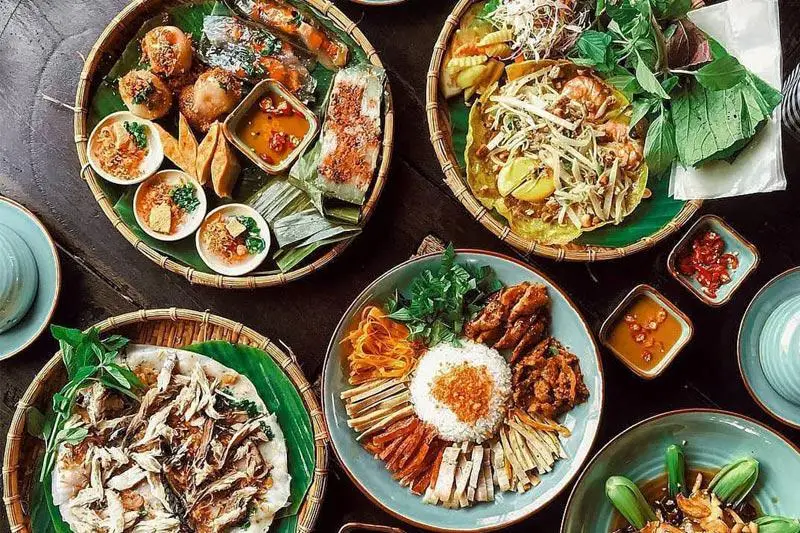
Street food culture vs traditional family kitchens
Street food is everywhere in Hue, but many recipes come directly from family kitchens rather than commercial kitchens. Vendors often specialize in just one or two dishes passed down through generations. This blend of home cooking and street culture is why Hue food feels deeply personal and consistent across the city.
Signature Hue dishes you must try
Hue cuisine is best understood through its core dishes. These foods appear on nearly every local menu and are eaten daily by residents, not just visitors. Each one reflects a specific part of Hue’s history, ingredients, and eating habits.
1. Bun Bo Hue – spicy beef noodle soup
Price range: 30,000 to 60,000 VND per bowl
Where to eat: Local breakfast-only shops around the Citadel, Dong Ba Market area, and small family-run eateries that close by early afternoon
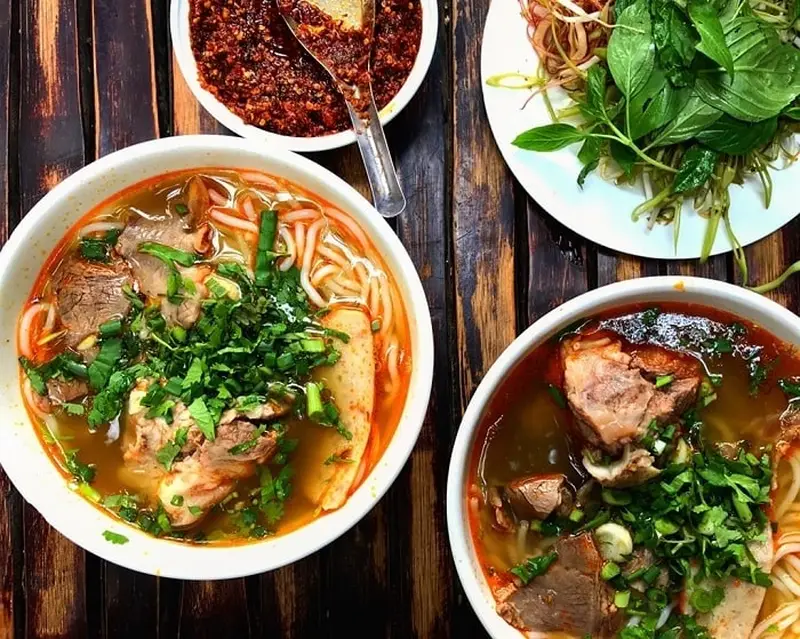
Bun Bo Hue is the city’s most famous dish and very different from pho. The broth is rich, spicy, and aromatic, made with beef bones, lemongrass, chili oil, and fermented shrimp paste.
Thick round noodles, beef slices, pork knuckle, and cubes of congealed blood are common toppings. Locals usually eat it for breakfast or early lunch.
2. Com Hen – baby clam rice
Price range: 20,000 to 40,000 VND per bowl
Where to eat: Streets near the Perfume River, especially in neighborhoods known for clam dishes rather than tourist zones
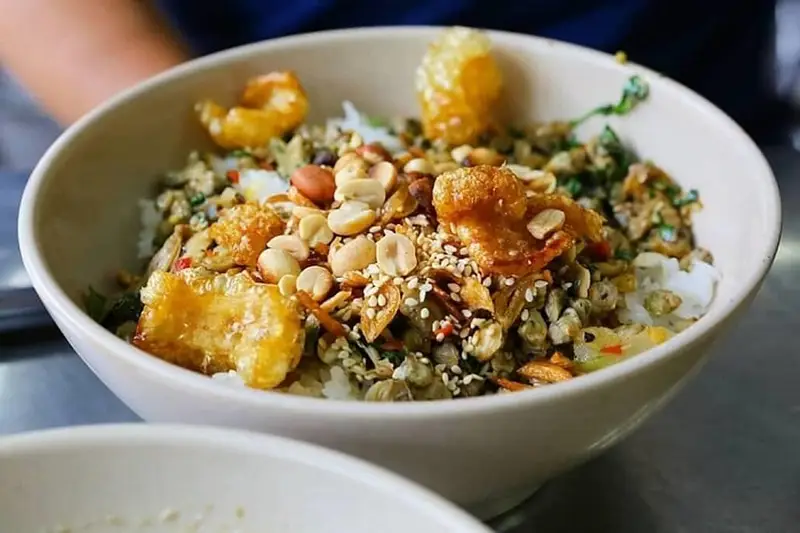
Com Hen is a signature local dish made with rice, sautéed baby clams, herbs, peanuts, crispy pork skin, and a small amount of clam broth. It is typically spicy and mixed thoroughly before eating.
Despite its simple appearance, it delivers strong, layered flavors and is deeply tied to Hue’s river culture.
3. Banh Beo – steamed rice cakes with shrimp
Typical price range: 20,000 to 35,000 VND per set
Where to eat: Afternoon snack spots near the Citadel and long-running local shops specializing only in Hue rice cakes
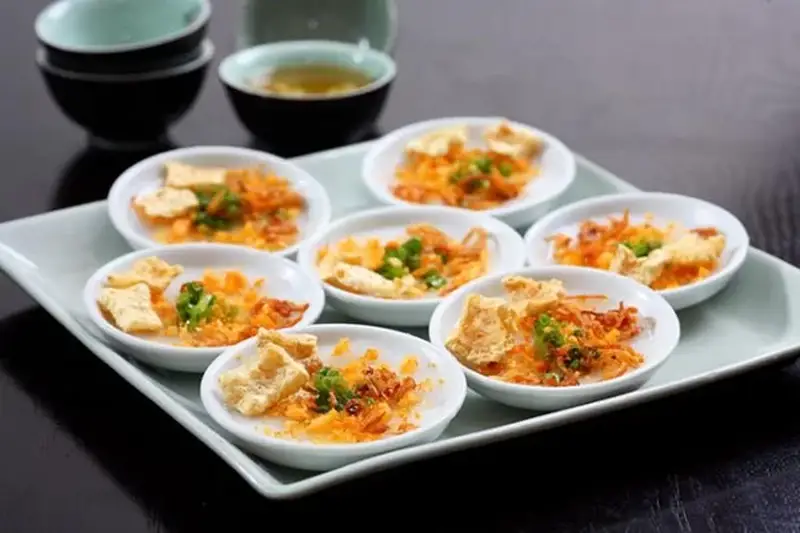
Banh Beo are small steamed rice cakes served in shallow dishes. They are topped with dried shrimp, scallion oil, and crunchy pork cracklings, then eaten with a light fish sauce. These cakes are often served in sets and eaten as a snack or light meal.
4. Banh Bot Loc – chewy tapioca dumplings
Typical price range: 20,000 to 35,000 VND per plate
Where to eat: Same rice cake shops that serve Banh Beo and Banh Nam, often family-run and open during daytime hours
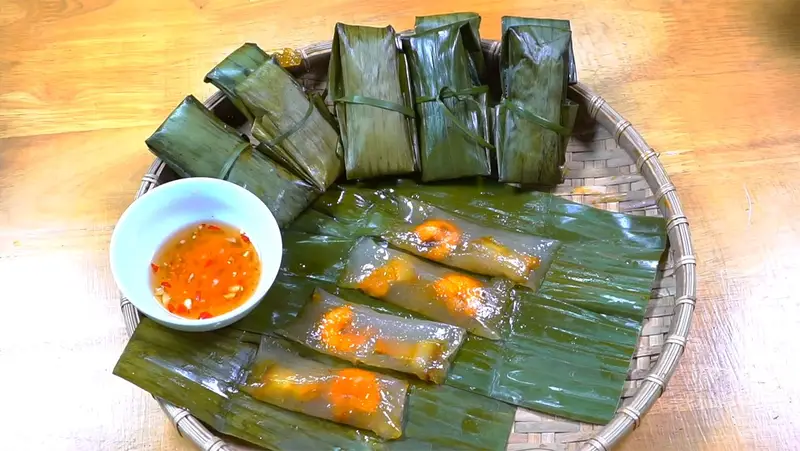
Banh Bot Loc are translucent dumplings made from tapioca starch, usually filled with shrimp and pork. They are wrapped in banana leaves or served loose on a plate. The texture is chewy, and the flavor comes from the filling and dipping sauce rather than the wrapper itself.
5. Banh Nam – flat rice cakes wrapped in banana leaf
Typical price range: 20,000–30,000 VND per plate
Where to eat: Traditional Hue cake houses and neighborhood eateries that focus on steamed dishes
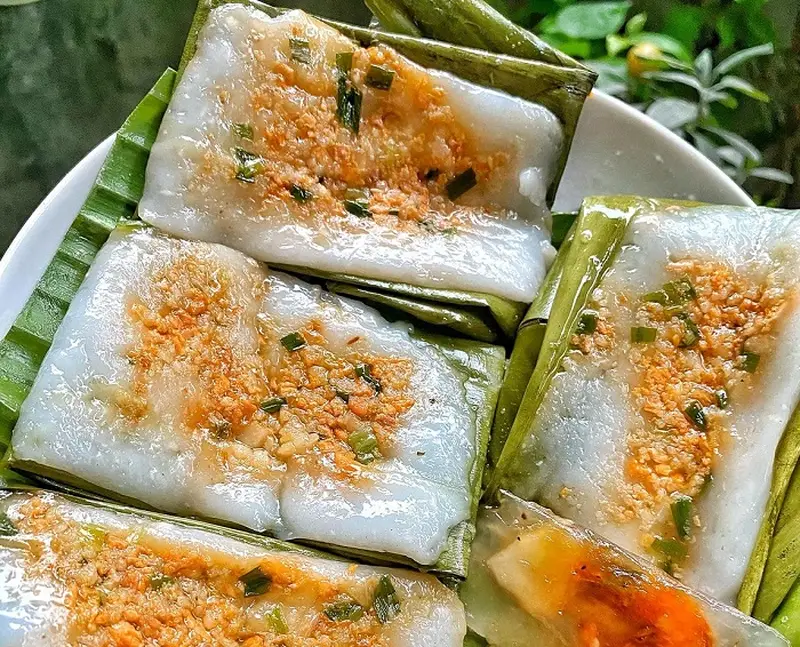
Banh Nam are thin, soft rice cakes spread flat inside banana leaves. They are lightly topped with shrimp and pork, then steamed. Compared to Banh Beo and Banh Bot Loc, Banh Nam has a milder taste and softer texture, making it popular with those new to Hue food.
6. Nem Lui – grilled pork skewers with peanut sauce
Typical price range: 50,000 to 80,000 VND per portion
Where to eat: Evening restaurants and street-side grills, especially in areas popular with local families rather than nightlife zones
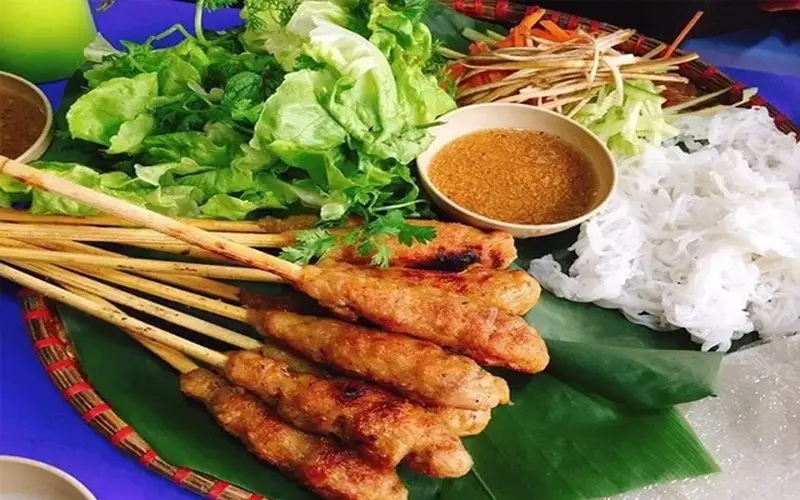
Nem Lui consists of seasoned pork grilled on lemongrass sticks. The meat is wrapped in rice paper with herbs and dipped into a thick peanut sauce unique to Hue. This dish is social and interactive, often eaten in the evening with friends or family.
7. Banh Khoai – Hue-style crispy pancake
Typical price range: 40,000 to 70,000 VND per pancake
Where to eat: Sit-down local restaurants and evening eateries, often near the Citadel or along central streets
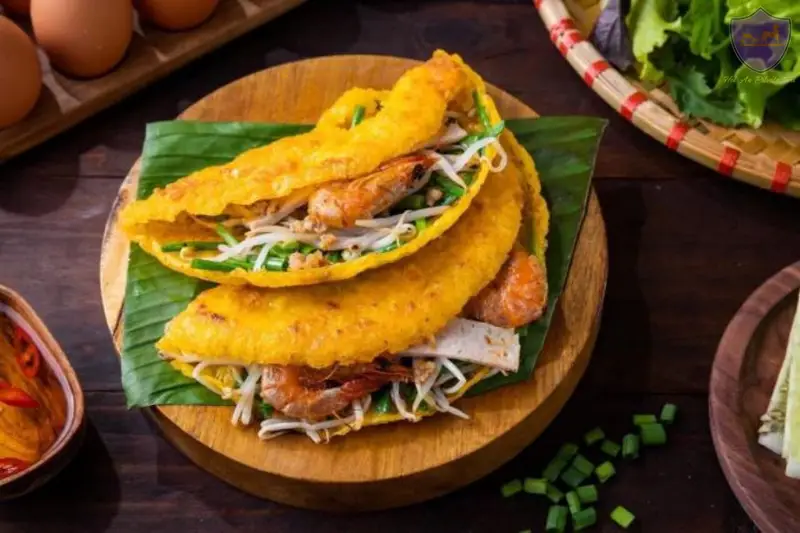
Banh Khoai is a small, crispy pancake made from rice flour and turmeric, filled with shrimp, pork, and bean sprouts. It is eaten with fresh herbs and a thick peanut-based dipping sauce that is richer than the sauce used for Nem Lui. This dish is heavier than most Hue snacks and usually eaten as a main meal.
8. Banh Canh Cua – thick crab noodle soup
Typical price range: 30,000 to 50,000 VND per bowl
Where to eat: Small soup shops that specialize in noodle dishes, commonly found in residential areas rather than tourist centers
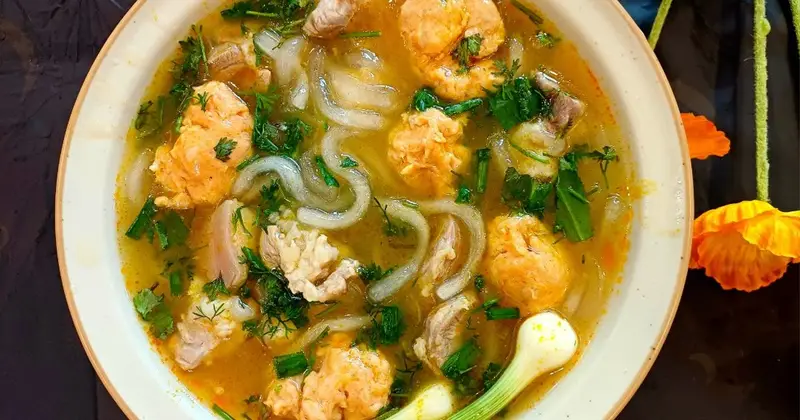
Banh Canh Cua features thick, slightly chewy noodles served in a crab-based broth. Toppings often include crab meat, pork, and sometimes fish cake. The soup is mild, filling, and comforting, making it popular for late lunch or dinner.
9. Bun Thit Nuong – grilled pork vermicelli
Typical price range: 35,000 to 55,000 VND per bowl
Where to eat: Daytime eateries and casual lunch spots serving rice and noodle dishes
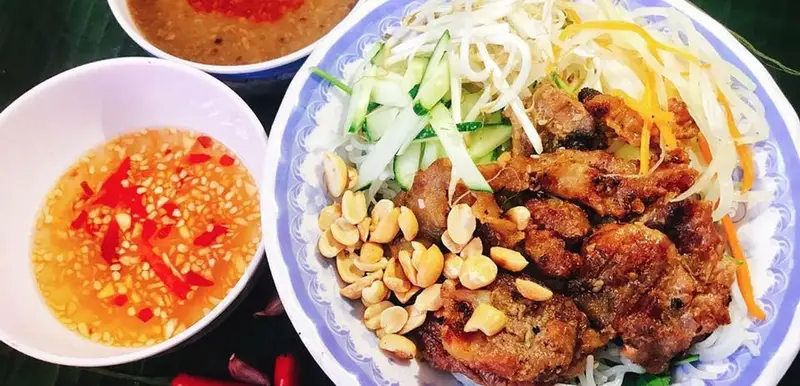
Bun Thit Nuong consists of rice vermicelli topped with grilled marinated pork, herbs, pickled vegetables, and fish sauce. While available across Vietnam, the Hue version is less sweet and more savory, matching local taste preferences.
10. Bun Cha Hue – Hue-style pork noodle soup
Typical price range: 30,000 to 45,000 VND per bowl
Where to eat: Neighborhood noodle shops and breakfast stalls that serve locals rather than tourists
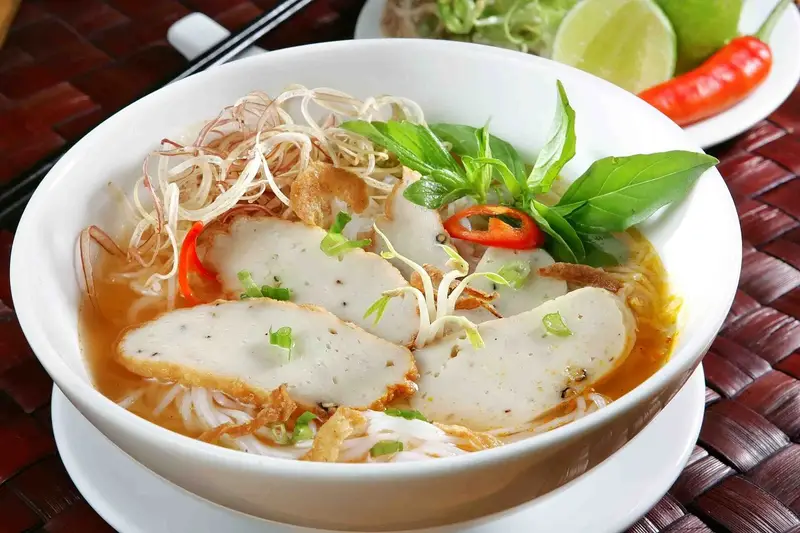
Different from Hanoi’s Bun Cha, this dish is a soup-based noodle dish with pork patties or slices served in a clear, lightly seasoned broth. It is simple, balanced, and commonly eaten by locals for a quick meal.
11. Che Hue – royal sweet desserts
Typical price range: 10,000 to 25,000 VND per cupWhere to eat: Dedicated dessert stalls, evening markets, and small family-run sweet shops
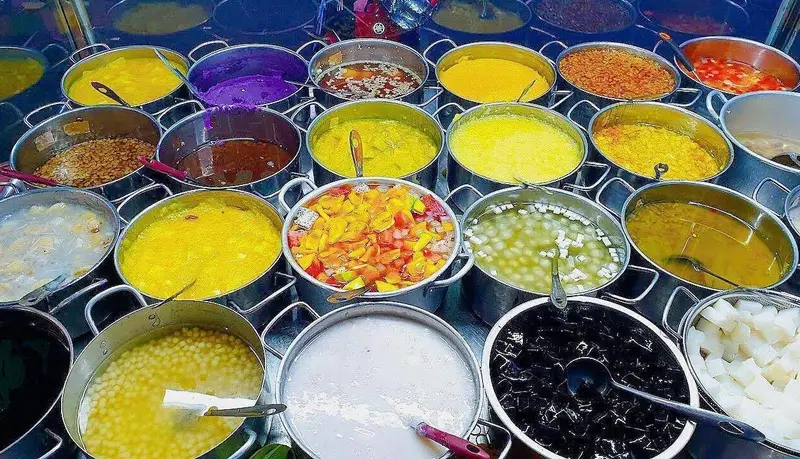
Hue is famous for its wide variety of che, or sweet soups. Ingredients include beans, lotus seeds, corn, taro, and fruit. Many recipes trace back to royal kitchens and are lighter and less sugary than desserts elsewhere in Vietnam.
12. Salt coffee and local Hue drinks
Typical price range: 20,000 to 35,000 VND per cupWhere to eat: Local coffee shops in central Hue and along quieter residential streets
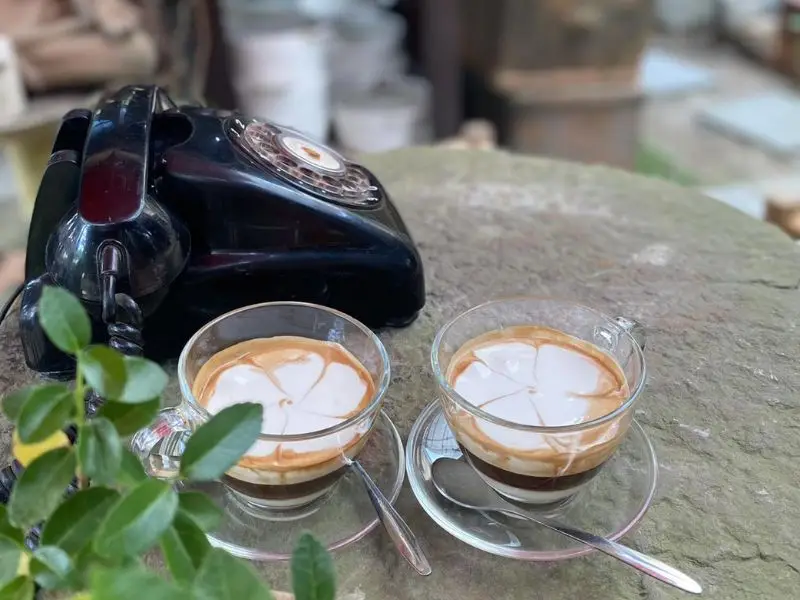
Salt coffee is a modern Hue specialty made with strong coffee topped with lightly salted cream. The salt enhances the sweetness and bitterness without making the drink taste salty. It has become a popular local alternative to traditional milk coffee.
Common mistakes first-time visitors to Hue make
Many visitors enjoy Hue’s food but miss its best flavors because they approach it the same way they do in larger Vietnamese cities. Hue cuisine follows its own rhythm, and understanding a few common mistakes can make a big difference.
1. Expect large portions instead of small, shared dishes
One frequent mistake is expecting large portions. Hue dishes are traditionally served in smaller sizes, designed to be eaten in combinations rather than as one heavy meal. Ordering just one dish and leaving still hungry often leads visitors to think the food is overpriced or unsatisfying, when the experience is meant to be layered.
2. Avoid dishes because they sound too spicy
Another common issue is avoiding spicy food altogether. While Hue cuisine is known for heat, not every dish is intensely spicy. Many shops allow you to adjust chili levels if you ask. Skipping dishes like Com Hen or Bun Bo Hue entirely means missing some of the city’s most important flavors.
3. Eat only in tourist-focused restaurants
Visitors also tend to eat only in tourist-heavy areas or sit-down restaurants. Some of the best Hue food comes from small family-run stalls that specialize in one dish and close early. Ignoring these places can lead to a less authentic experience.
Hue cuisine follows different principles. It is less sweet than southern food and more layered than northern food. Direct comparisons often lead to disappointment instead of understanding.
FAQ about The food in Hue
Is Hue food spicy, and how do I order it?
Hue food is known for bold flavors, but not all dishes are very spicy. Some classics, like Bun Bo Hue and Com Hen, traditionally include chili, while others are mild by default. If you want less heat, you can ask for “it cay” (less spicy) or simply leave the chili on the side.
What food is Hue most famous for?
Bun Bo Hue is the dish most closely associated with the city. It represents Hue’s flavor profile and imperial heritage better than any other single dish. Rice cakes such as Banh Beo, Banh Bot Loc, and Banh Nam are also considered essential Hue specialties.
Can vegetarians eat well in Hue?
Yes. Hue has a strong vegetarian food tradition influenced by Buddhism. Many local eateries serve vegetarian versions of noodle soups, rice dishes, and rice cakes. Vegetarian restaurants are common, especially near pagodas and residential areas.
Is Hue food different from Hanoi and Saigon?
Yes. Hue cuisine is generally spicier than Hanoi food and less sweet than Saigon food. Portions are smaller, flavors are more layered, and presentation matters more. Hue food focuses on balance rather than richness or size.
How many days do I need to eat well in Hue?
One full day is enough to try the highlights, but two days allows you to explore rice cakes, noodle soups, desserts, and coffee without rushing. Hue’s food culture rewards slower eating and repeated meals rather than one large food crawl.
Final thoughts on the best food in Hue
Hue’s food culture is not about chasing trends or oversized meals. It is built on tradition, balance, and recipes refined over generations.
Eating well in Hue means slowing down, trying several small dishes, and understanding that flavor and history matter more than presentation or convenience.
If you approach the city with curiosity and patience, Hue rewards you with some of Vietnam’s most distinctive food experiences.
From spicy noodle soups to delicate rice cakes and royal desserts, the best food in Hue tells the story of the city itself.
- Website: https://vietnambackpackerhostels.com/
- Facebook: https://www.facebook.com/vietnambackpackerhostels
- Instagram: https://www.instagram.com/vietnambackpackerhostels
- TikTok:https://www.tiktok.com/@vietnambackpackerhostels

