
Ninh Binh – a mesmerizing landscape of limestone karsts jutting out of emerald rice paddies and winding rivers. It is a highlight of Northern Vietnam and a must-do on any backpacker’s itinerary. However, your experience here is heavily dictated by the weather.
Visit at the right time, and you will be cycling through golden rice fields under clear blue skies. Visit at the wrong time, and you might find yourself stuck in a homestay watching torrential rain flood the roads, or fighting heatstroke while climbing the 500 steps of Mua Cave.
So, when exactly should you book your trip?
Whether you are chasing the perfect Instagram shot of the harvest season or simply looking for the most comfortable trekking weather, this guide breaks down the best time to visit Ninh Binh for every type of traveler.
Quick answer: when is the best time to visit Ninh Binh?
If you are looking for a quick verdict before planning your Ninh Binh route, here is the breakdown.
For the absolute best experience combining manageable weather and stunning scenery, late May to early June and late September to October are the ideal windows.
- The “Golden Season” (Ripe Rice): Go in late May or early June. This is when the rice fields in Tam Coc turn a brilliant yellow just before the harvest. It is hot, but the visuals are unbeatable.
- The Best Weather: Go in late October or November. The humidity drops, the skies are crystal clear, and the temperatures are cool enough for all-day cycling and hiking.
- The Lotus Season: Go in June. The ponds at the base of Mua Cave are filled with blooming lotus flowers, creating a magical foreground for your photos.
However, avoiding the crowds is just as important as the weather. If you are wondering about the best time to go to Ninh Binh to avoid tourists, try to visit mid-week and avoid Vietnamese national holidays like Tet (Lunar New Year), April 30th or Vietnamese Independence Day September 2.

Understanding the “Golden Season”: Chasing the ripe rice fields
For many photographers and nature lovers, the primary goal is to see the famous “golden carpet” of rice fields. However, there is often confusion about when this actually happens because different parts of Vietnam harvest at different times.
In Ninh Binh, specifically the Tam Coc area, there is usually only one major rice crop per year.
- The Green Stage: From February to April, the rice is growing. The landscape is a vibrant, lush green. It looks fresh and full of life, often covered in a layer of morning mist.
- The Turning Point: By mid-May, the green stalks begin to turn yellow.
- The Golden Harvest: The peak best time to visit Ninh Binh for golden rice is the last week of May and the first week of June.
Important Warning: The harvest happens incredibly fast. Once the rice is ripe, local farmers will cut it down within a week or two. If you arrive in late June, you might miss the gold entirely and find brown, muddy fields instead. If photography is your priority, timing is everything.
Ninh Binh weather and experiences by season
Northern Vietnam has four distinct seasons, and Ninh Binh is no exception. Here is a deep dive into what you can expect throughout the year.
Spring (February to April): Misty, green, and festive
Spring in Ninh Binh is a time of rebirth. Following the cold winter, the weather starts to warm up, and the locals are in high spirits following the Lunar New Year (Tet) festival.
The Vibe:
This is the most atmospheric time to visit. You will often encounter a weather phenomenon called “Crachin” – a persistent drizzle or heavy mist that hangs over the limestone mountains.
While it might not be perfect for blue-sky photography, it makes the landscape look like a traditional ink wash painting.
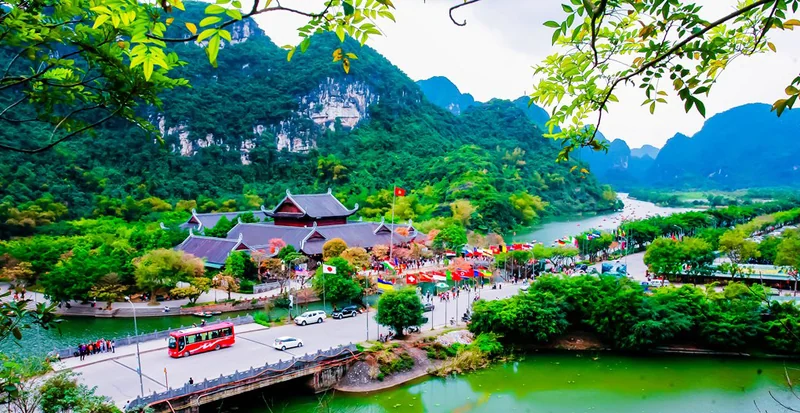
Weather Conditions:
- Temperature: 18°C to 25°C (64°F – 77°F).
- Humidity: Very High (often over 90%).
- Rainfall: Light drizzle is common, but heavy storms are rare.
Pros:
- The vegetation is incredibly green and lush.
- Great temperature for climbing Mua Cave without sweating too much.
- Cultural festivals are in full swing at Bai Dinh Pagoda and Hoa Lu Ancient Capital.
Cons:
- The high humidity can make everything feel damp (clothes don’t dry well).
- Visibility from viewpoints can be poor due to fog.
- February can be crowded with domestic tourists visiting temples for New Year prayers.
Summer (May to August): Golden rice, lotus blooms, and heat
Summer brings drama. The colors are saturated, the sun is intense, and the landscape is at its most vibrant. This is widely considered the best time to visit Ninh Binh for photographers who can handle the heat.
The Vibe: It is energetic and bright. The mornings are stunning, but by midday, the heat drives everyone indoors or into the shade. The evenings are warm and perfect for sitting by a lake with a cold drink.

Weather Conditions:
- Temperature: 29°C to 38°C (84°F – 100°F).
- Humidity: High.
- Rainfall: Frequent afternoon thunderstorms, especially in July and August.
Pros:
- May/June: The rice harvest season in Tam Coc (The Yellow Season).
- June/July: The Lotus flowers bloom in the ponds near Hang Mua, offering spectacular photo opportunities.
- Blue skies are common in the mornings.
Cons:
- The heat can be oppressive. Hiking at noon is dangerous due to heatstroke risk.
- July and August are the start of the rainy season. You might encounter heavy downpours that flood the roads temporarily.
- Mosquitoes are more active during these humid months.
Autumn (September to November): The most comfortable climate
Ask any expat living in Vietnam, and they will tell you that Autumn is the best time to go to Ninh Binh. The fierce heat of summer fades away, leaving behind cool, crisp air and clear views.
The Vibe: Relaxed and breezy. This is the perfect season for “slow travel.” You can rent a bicycle and ride for hours without getting exhausted. The water lilies begin to bloom in the rivers, adding a touch of pink to the dark water.

Weather Conditions:
- Temperature: 20°C to 28°C (68°F – 82°F).
- Humidity: Low and comfortable.
- Rainfall: September can still see typhoons, but October and November are generally dry.
Pros:
- Crystal clear visibility from mountain viewpoints.
- Perfect temperature for all outdoor activities (cycling, hiking, boat rowing).
- In early October, you might catch a second (smaller) rice harvest in some specific areas outside of Tam Coc.
Cons:
- September is a transition month and carries a risk of typhoons or heavy tropical storms. Always check the forecast.
- Days start getting shorter, meaning less daylight for exploration.
Winter (December to January): Quiet vibes and grey skies
Winter in Northern Vietnam is often a surprise to Western travelers who expect tropical heat year-round. It gets genuinely cold, but it also offers a sense of solitude that is hard to find in other seasons.
The Vibe: Quiet, moody, and peaceful. The tourist crowds thin out significantly. The water in the rivers turns calm and dark, and the limestone peaks look imposing against the grey sky.

Weather Conditions:
- Temperature: 10°C to 18°C (50°F – 64°F).
- Humidity: Low to Moderate.
- Rainfall: Very dry. Rain is rare.
Pros:
- Almost no tourists. You might have the Trang An boat ride all to yourself.
- Dry weather means no mud on the hiking trails.
- Mosquitoes are almost non-existent.
Cons:
- It is cold, especially on a motorbike or open boat. You will need a jacket.
- The landscape is less vibrant; the rice fields are often fallow (brown mud) waiting for the spring planting.
- Photos can look flat due to the overcast grey skies.
Best time to visit Ninh Binh for specific interests
Your ideal timing depends heavily on what you want to do. Here is a breakdown based on activities.
For the best photos (Instagram & Drone)
Target late May. You want the combination of blue skies and golden rice fields. Wake up at 5:30 AM to catch the sunrise at Mua Cave, then head to Tam Coc for the boat ride before the day trippers arrive.
For cycling and trekking
Target November or March. Cycling through the rural villages is a highlight of Ninh Binh. In these months, the air is cool enough that you can ride for 20km without overheating. In summer, cycling is only viable in the early morning or late afternoon.
For boat tours (Trang An & Tam Coc)
- Avoid: Mid-day in June/July. Being on a metal or bamboo boat with no shade for 3 hours in 38-degree heat is exhausting.
- Best: Late afternoons in Autumn. The light is soft, the water is calm, and the temperature is perfect.
For lotus flowers
The lotus season is short. The flowers begin to bloom in late May, peak in June, and are mostly gone by mid-July. The best place to see them is the wooden walkway at the entrance of Mua Cave or the bird valley in Thung Nham.
Months to approach with caution (The “Not-So-Good” times)
While Ninh Binh is visitable year-round, there are certain times that might negatively impact your trip.
- August to early September (Typhoon Season): Northern Vietnam is prone to typhoons during this window. While direct hits are rare in Ninh Binh, the outer bands of storms can cause days of torrential rain and flooding. If you visit during this time, keep your itinerary flexible.
- Vietnamese New Year (Tet): Usually falling in late January or early February. During Tet, many family-run restaurants close, and prices for accommodation can double. However, the biggest issue is the crowds of domestic tourists at spiritual sites like Bai Dinh Pagoda.
- July Afternoons: As mentioned, the combination of heat and humidity can be dangerous for those not acclimated to tropical climates. If you visit in July, plan your activities for early morning and late afternoon, and rest during the middle of the day.
Month-by-month quick summary table
To help you visualize the best time to visit Ninh Binh, here is a quick reference guide:
- January: Cold, dry, quiet. Good for budget travelers.
- February: Misty, humid, festive. Good for culture.
- March: Green, pleasant temperature. Good for general sightseeing.
- April: Warmer, clear skies. End of spring.
- May: Hot, start of harvest. Excellent for photos.
- June: Very hot, golden rice, lotus blooms. Visual peak.
- July: Hot, humid, occasional storms. Good for lotus.
- August: Rainy, lush green. Risk of storms.
- September: Transition month. Risk of typhoons early on, beautiful later.
- October: Cool, clear, harvest in some areas. Top backpacker choice.
- November: Cool, dry. Perfect for cycling.
- December: Cold, grey, dry. Very quiet.
Frequently asked questions about timing your Ninh Binh trip
What represents the best time to visit Ninh Binh for golden rice fields?
The golden rice season in Tam Coc peaks in late May and early June. There is also a smaller harvest in other districts in October, but May is the most famous one.
Is it worth visiting Ninh Binh in the rainy season?
Yes, but come prepared. The scenery is incredibly lush and green during the rainy season (summer). Just bring a poncho and plan for indoor activities or cafe hopping during the afternoon downpours.
When is the lotus season in Ninh Binh?
The lotus flowers bloom primarily in June. You can see them in the ponds surrounding the limestone mountains, particularly at the Hang Mua ecolodge area.
Is Ninh Binh cold in winter?
Yes, it can be. Temperatures can drop to 10°C (50°F). While this isn’t freezing, buildings in Vietnam often lack insulation or heating, so it can feel colder than the number suggests. Bring a fleece or light jacket.
Conclusion
Ultimately, the best time to visit Ninh Binh is whenever you can fit it into your itinerary. This region is magical rain or shine.
If you have the luxury of choice, aim for May to see the golden fields or October for the perfect trekking climate. But even if you find yourself there on a misty day in March or a hot afternoon in July, the majesty of the ancient limestone karsts will not disappoint. Just pack accordingly, rent a bike, and get ready to explore one of Vietnam’s most beautiful provinces.

